Monday, March 7, 2016

NJournal Notes 20. Visualizing Macro Meso Micro


The image below was created using Ripple Tank Simulator. On the right hand side are the controls available.


Let's call area A the Macro level, area B the Meso level and area C the Micro level. The specific word or symbol is not important. What is important for nemetics is to understand any phenomenon it must be placed at the B | Meso level. The forces in play come from the proximate nShapes one level up and one level down.

Notice in the image there are no oscillators at the B level. The flow of forces are the result of interference patterns from A and C.

Let's call the overall rectangular boundary of Neme. In a context specific analysis the Neme would have more layers of A,B,C | Macro - Meso - Micro areas.  The number of layers necessary depends on the number of dimensions that give a satisfactory answer to the question we are asking of the defined networks of complex adaptive system.

A context specific use of the tool requires more functionality.  The vision is that with appropriate modifications we will be able to use a version of the software to visualize big data in a useful way for decision support.


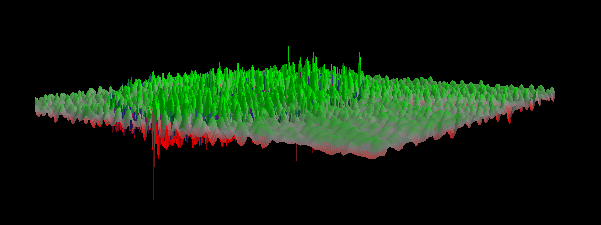
Figure 2 below is a side view of the 3 D version of the overall field. It suggests we will be able to get a wave form for the Neme itself.


Figure 2

Friday, March 4, 2016

NJournal Ripple Tank Experiments RTE 3.03


At the boundaries of each shape are communication oscillators. As they oscillate, they create waves of affect, cognition, in the context of material conditions. The boundaries create constraints. The internal neme exchanges create complexity. The nemes sent out from the triad of nested shapes are waves that connect to nemes in the environment.

It can be pictured as below:

Screen%2BShot%2B2016-03-04%2Bat%2B8.35.23%2BAM.png
Figure 1 2D
Screen%2BShot%2B2016-03-04%2Bat%2B8.31.39%2BAM.png
Figure 2. 2D

Screen%2BShot%2B2016-03-04%2Bat%2B8.31.39%2BAM.png
Figure 3. 2D

Screen%2BShot%2B2016-03-04%2Bat%2B8.33.29%2BAM.png
Figure 4.0 3D

Screen%2BShot%2B2016-03-04%2Bat%2B8.34.05%2BAM.png
Figure 5.0 3D

Screen%2BShot%2B2016-03-04%2Bat%2B8.34.45%2BAM.png
Figure 6.0 - 3D

Sunday, February 14, 2016

Njournal Notes 18. Mulling Emotion Waves or Affective Waves?

Recently we have been discussing the advantage of moving from Waves of Emotion to Waves of Affect.

Excerpts from the article below:
 "emotions arise from cognitive interpretations of core physiological experiences . . .  
circumplex model of affect suggest that all affective states arise from two independent neurophysiological systems, which, for the purposes of discussion here, we term the valence and arousal systems  . . . . 
As emotions are experienced and communicated, cognitive interpretations are employed to identify the neurophysiological changes in the valence and arousal systems and conceptually organize these physiological changes in relation to the eliciting stimuli, memories of prior experiences, behavioral responses, and semantic knowledge 


The circumplex model of affect: An integrative approach to affective neuroscience, cognitive development, and psychopathology
Jonathan Posner,a,b James A. Russell,c and Bradley S. Petersona,b

The circumplex model of affect proposes that all affective states arise from cognitive interpretations of core neural sensations that are the product of two independent neurophysiological systems. This model stands in contrast to theories of basic emotions, which posit that a discrete and independent neural system subserves every emotion.

We propose that basic emotion theories no longer explain adequately the vast number of empirical observations from studies in affective neuroscience, and we suggest that a conceptual shift is needed in the empirical approaches taken to the study of emotion and affective psychopathologies. 
The circumplex model of affect is more consistent with many recent findings from behavioral, cognitive neuroscience, neuroimaging, and developmental studies of affect. Moreover, the model offers new theoretical and empirical approaches to studying the development of affective disorders as well as the genetic and cognitive underpinnings of affective processing within the central nervous system. 

Basic emotion theorists have primarily explored the behavioral and expressive manifestations of emotion. Investigations of the subjective, or experiential, components of emotion, rather than supporting a one to one correspondence between a discrete emotion and an underlying neural system, have instead suggested that emotions arise from cognitive interpretations of core physiological experiences (). 


Mulling


The reality is that "emotion" are the conscious interpretations of physical states within the body. The physical state within the body are interactions between the material conditions outside the body, cognitive interpretations and affect created by the actions of two neural systems in the body.

So Emotion = affWave + cogWave + mWaves.  According to the paper, emotions are on various spectrums. Bored to calm, depressed to serene, sad to contented, upset to happy, stressed to elated, nervous to excited. 


Thursday, February 11, 2016

Njournal Notes 14.5 Applied Nemetic Math

Stumbling towards nemetic maths. The value of mathematics is to focus what we see.


In  post NJournal Notes 14.4,  I suggested a math to helps us focus on what we see in complex adaptive systems. In this Note I suggest a modification. to


I=CNxk
Let:
“ I “ = Intent.
“ C ” = Constraints.
“ Nx “ = Neme Exchange
" k " = is an exponential function. In any organization a common intent creates agile coherence. No matter what the challenges and opportunities agility is required to respond fast enough to make a difference. An intent is different from a goal. In complexity a goal is, by nature, ever changing as the circumstances are always changing. A common Intent are a set of values that allow one to navigate through changing circumstance. A common intent minimizes the costs of compliance used in a top down management style. Mission statements and visions from the top sometimes increase Intent, but just as often decrease trust in managers and leaders. So the desired state of affairs is to take advantage of the fact that Intent is an emergent property. Neme exchange is communication sent, received and resent. To create value , it is the Exchange from one to another back to one that makes the difference. A neme sent that is not exchange can create more mistrust than no sending at all. The frequency of neme exchange increases the number and strength of small networks. Small networks are defined as having the minimum number of steps between any node and any other node. When there are direct connections between nodes, the small networks are at their most efficient. It is well understood that the knowledge creation of a network increases exponentially based on the number of nodes. Constraints channel or block nemetic flow. For the agile coherent organization, nemetic flow must be channel, not a blockage. How to Measure? 
Nemetic flow is the easiest, the frequency and pattern of nemetic flow. From a study of brain function. "technique measures neural activity via blood flow in the brain while people are awake and mentally active. We calculated a “functional connectivity profile” for each person based on their individual patterns of synchronized activity between different parts of the brain."   My conjecture is that we can create a "functional connectivity profile for any organization.
For further research how to measure Constraints and Intent.

Intent - Agile Coherence Some promising topics for research: from wikipedia Intentional communities.
Group Cohesiveness
Agility
Competing through organizational agility | McKinsey Five Agile Metrics You Won't Hate http://bit.ly/1RtEMXg

Wednesday, February 10, 2016

Njournal 14.4 Towards Nemetical Mathematics

As we stumble along to come up with a simple equation for Nemetic reality, I offer for consideration the following.

I=CN2


“ I “ = Intent.
“ C ” = Constraints.
“ N “ = Neme
The 2 is in the superscript to capture the non linear nature of the relationships.

Neme is a fractal in that an nString, nTube or nCell are nemes when viewed from a different level.  A string, tube or cell can also be measured on the ruler of frequency and amplitude of neme exchanges.

Intent is an emergent property of Constraints and an exponential function of nemetic vibration. Intent acts to augment the signals emitted by a neme.

Still missing are measures of Intent and Constraints.